Home / Development / Fabric-to-garment process

Performance Fabric Development & Premium Apparel Manufacturing Partner

Fabric to garment, engineered as one process.

We connect material engineering, application-specific performance validation and precision garment manufacturing to help brands develop products with greater confidence. Seven stages, seven written gates, and a document you keep at every one.

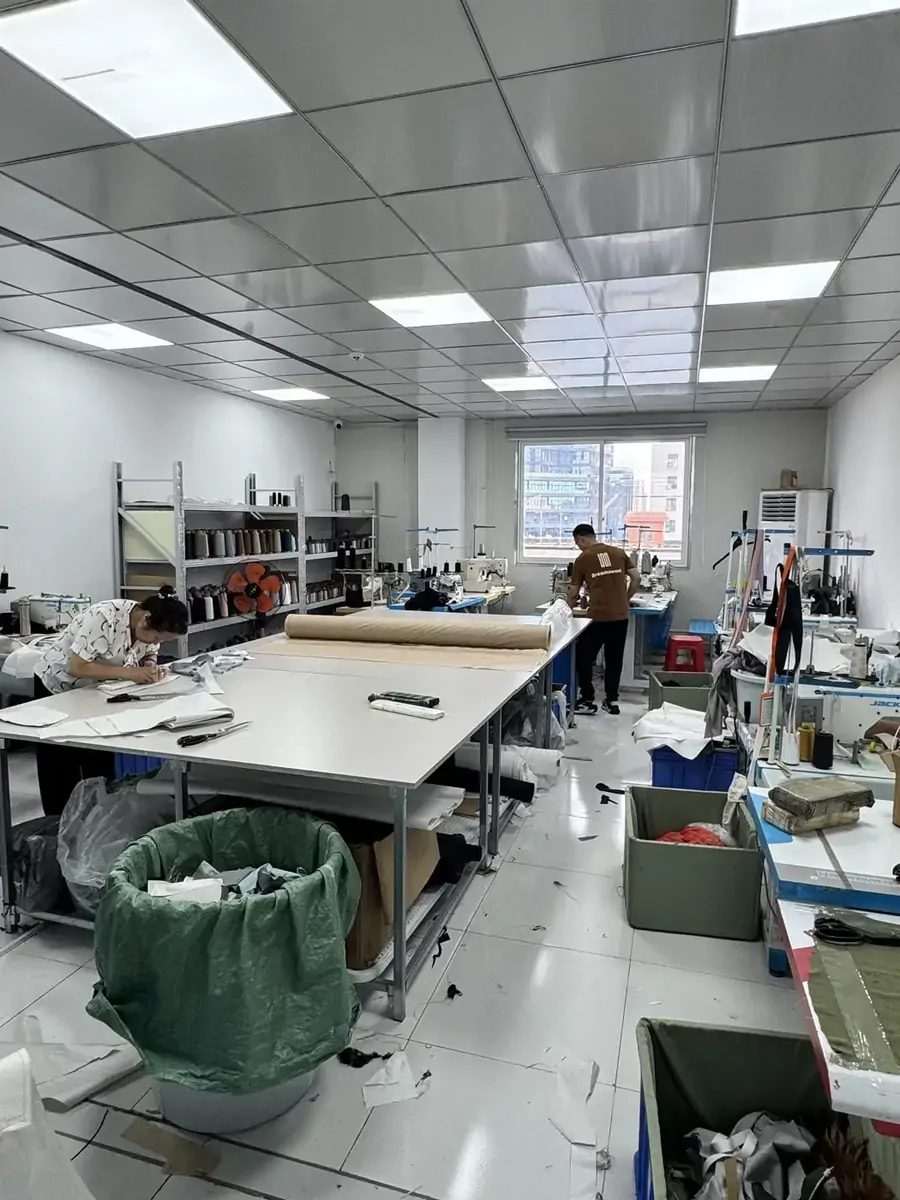
Pattern and sampling room at ZIESHINE in Humen, Dongguan
Pattern & sampling roomHumen, Dongguan · 200+ people · ~200,000 pcs / month

What a buyer should be able to answer

Three questions every development partner should answer — in writing.

A style photo, a low MOQ and a fast quote answer none of them. Our process is built so each one has a written answer and a page of proof you can check.

Question 01

Why do you recommend this fabric?

Because it was chosen from how the garment has to perform, not from a swatch book. We rank the wear requirements for your activity and climate first, then name a base — or say plainly that no base fits yet and route it to mill development.

  • An activity × performance matrix ranks what decides success
  • Named bases with published composition, GSM and hand
  • A custom route, co-developed with specialist mills, when nothing fits

Answered in stages01 Brief 02 Material

ProofWear performance by activity · Fabric Selector · Compare named bases

Question 02

What evidence shows it suits my product?

Evidence with a status on it. Every check is labelled on file, in-house check or programme gate, so you can see what exists today and what will be tested for your PO — at a lab you accept.

  • AquaForm™ 220: Intertek report GZHT03093360 on file
  • In-house four-way stretch gate and ~400 lux squat check before sampling
  • Programme tests written on the PO — SGS, QIMA, BV and Intertek welcome

Answered in stages03 Validation

ProofFabric test pack · Fabric Lab guides · AquaForm™ report details

Question 03

Can you make it into my garment, consistently?

Yes — because bulk cannot start until you sign a PPS made on bulk fabric, and the line is checked against that sealed sample at 20, 50 and 80% of output, then inspected to an agreed AQL plan.

  • Pattern, grading and samples in our own sample room
  • PPS on bulk fabric and trims becomes the sealed standard
  • Rework at our cost if a lot fails final inspection

Answered in stages04 Pattern 05 Fit 06 PPS 07 Bulk

ProofQuality gates · Company facts · A bulk rescue, reconstructed

Who does what

Four parties. One accountable desk.

Specialist mills make the cloth; we specify it, validate it and turn it into your garment. Knowing who owns each step is how you know who answers for it.

Mill partners

Yarn, knitting, dyeing and finishing — to our specification. Recycled fibre runs on the mill’s transaction certificate.

ZIESHINE development desk

Brief, fabric specification, lab-dip approval, validation plan, pattern, fit and grading — one named contact.

ZIESHINE Dongguan floor

Cut, sewn, inspected and packed in Humen, Dongguan — 200+ people · ~200,000 pcs / month.

Your lab and inspector

Third-party tests and inspections at a lab you accept. SGS, QIMA, BV and Intertek are welcome.

The development process

Seven stages. Nothing moves until the gate is cleared.

Each stage lists what happens, what you receive, the condition for moving on — and what happens if it is not met. Timings come from our Company Fact Sheet.

Lab dip · typically
48 hours
Proto sample
7–9 working days
Custom fabric · adds about
15–20 days
Bulk activewear · about
25–30 days after PPS

Stage 01 of 7

Performance brief

Start from what the garment must do, not from a fabric name.

YouZIESHINE development desk

What happens

  • Send design images, sketches, drafts, moodboards or a full tech pack
  • Name the activity, the climate and the one function that must not fail
  • Add target quantity, colours, market and landed-price band
  • Mutual NDA before anything proprietary changes hands

What you receive

  • A written development brief with ranked performance priorities
  • A proposed route — library base, named base or custom fabric
  • A first answer on MOQ, sample cost and timeline

Gate to move on

Ranked priorities agreed in writing. Every later gate is checked against this brief.

If it is not metOpen questions are listed in the brief, not guessed — sampling waits until they are answered.

TimingExport desk replies within 12 h (GMT+8)

ProofFabric Selector · Tech pack guide

Stage 02 of 7

Material engineering

Fibre, structure, weight and finish specified for the job — knitted and dyed by specialist mills to our specification.

ZIESHINE development deskMill partners

What happens

  • Fibre and elastane chosen for the use — nylon 66, nylon 6, polyester or recycled options
  • Knit structure, GSM, width and surface finish set against the ranked priorities
  • Lab dips with our dye partners, checked against your standard — typically 48 h, ΔE ≤ 0.8
  • A named base when one fits; co-development with a mill when none does

What you receive

  • Swatches and hand cards
  • A spec card: composition, GSM, width, finish
  • Approved lab dip per colour

Gate to move on

Hand, weight and colour approved on swatch before a garment is sampled.

If it is not metRe-dip, adjust the finish or move to another base. No garment is sampled on an unapproved fabric.

TimingCustom fabric typically 500m–1300m+ / colour · adds ~15–20 days

We do not own knitting or dyeing machines, and say so up front. Fabric developed for you is contractually exclusive.

ProofNamed fabric bases · Custom fabric development · Nylon 66 vs nylon 6

Stage 03 of 7

Performance validation

Each property the activity depends on gets a method, a status and a pass line — before fabric is cut for bulk.

ZIESHINE development deskThird-party lab

What happens

  • Validation plan drawn from the activity × performance matrix
  • In-house gates: four-way stretch and a squat check at ~400 lux
  • Programme tests named on the PO — colourfastness, pilling, abrasion, chlorine, UPF, dimensional stability
  • You nominate the lab; SGS, QIMA, BV and Intertek are welcome

What you receive

  • A validation plan with a status on every line
  • Reports already on file — e.g. AquaForm™ 220, Intertek GZHT03093360
  • Programme results for your PO

Gate to move on

The properties ranked critical pass on fabric before it is cut for bulk.

If it is not metChange the fabric or finish and re-test. Fabric that fails a critical line is never cut for bulk.

TimingPer test method and laboratory

On file
A report that exists today, with a number you can verify.
In-house check
Run by our team before sampling — a gate, not a lab certificate.
Programme gate
Tested for your PO at a lab you accept; reported before bulk.

ProofActivity × performance matrix · Fabric test pack · Squat-proof testing

Stage 04 of 7

Pattern & prototype

Patterns drafted for stretch fabric, and the first sample sewn on the target fabric with production seams.

ZIESHINE sample room
Pattern and sampling room at ZIESHINE, Dongguan

What happens

  • Pattern making in our own sample room, with ease and shrinkage allowances set for the actual fabric
  • Construction chosen for the use — 4-needle 6-line flatlock, coverstitch, bonding, heat-set pleats
  • Proto sewn on the target base, not a stand-in
  • Measured against the spec sheet before it leaves the room

What you receive

  • Proto sample
  • Measured spec sheet with tolerances
  • Construction notes — seams, elastics, trims

Gate to move on

Construction proven feasible at bulk speed; every comment logged against the spec.

If it is not metPattern or construction revised and a new proto sewn — comments carried forward, not reset.

Timing7–9 working days · US$50–100 per garment piece

ProofFlatlock on our floor · Stretch recovery

Stage 05 of 7

Fit & grading

Fit is approved on a body in motion, then graded so every size behaves like the sample.

YouZIESHINE sample room
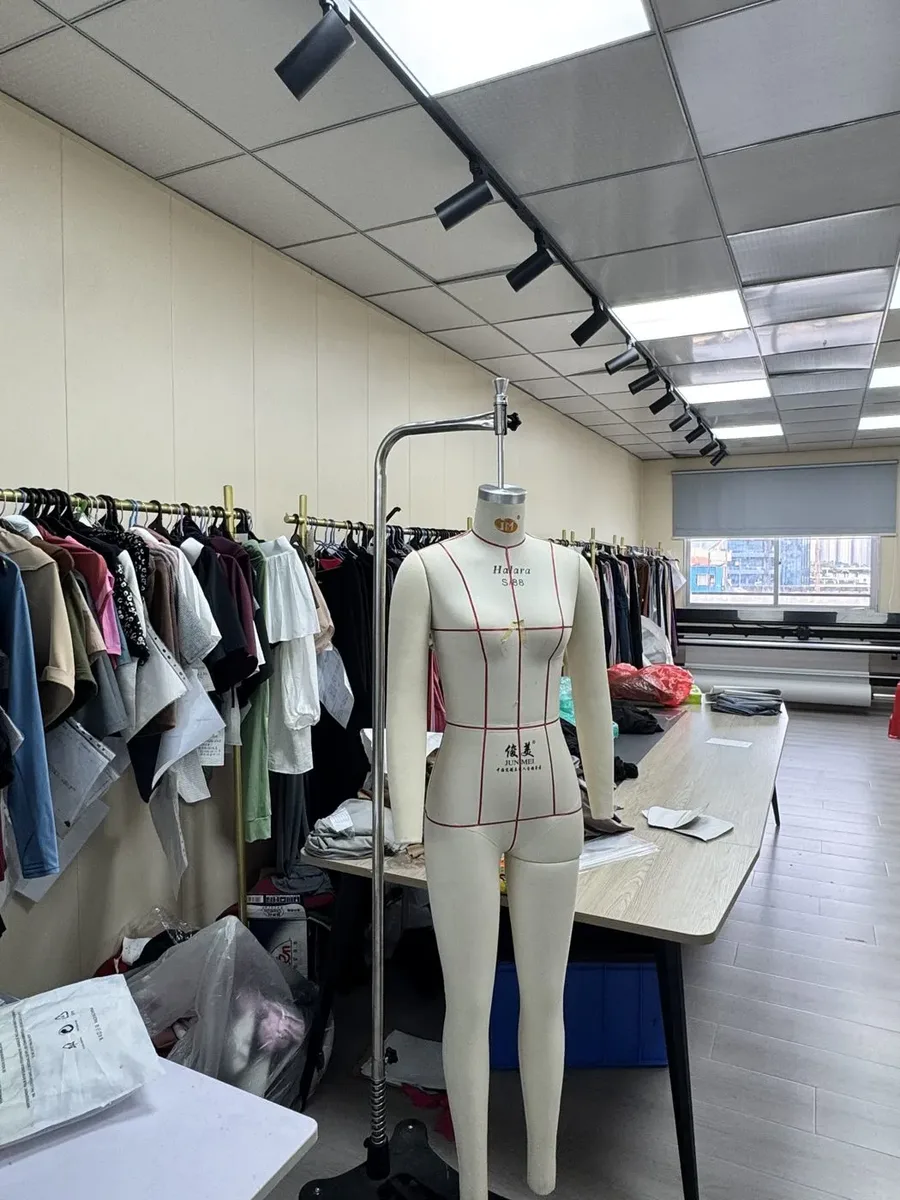
Sample room with dress form and fit samples

What happens

  • Fit reviewed on the form, then checked in motion — squat, lunge, overhead reach
  • Waistband, inseam and strap behaviour checked under stretch
  • Opacity re-checked on the garment, not only on the fabric
  • Grade rules set across the range; size set on request

What you receive

  • Fit comments with photos, closed out line by line
  • Graded spec across the size range
  • Revised pattern

Gate to move on

Every fit comment closed before PPS — none carried into bulk.

If it is not metAnother fit round on the revised pattern, until the open list is empty.

TimingPer fit round

ProofFit transfer from another factory

Stage 06 of 7

Pre-production sample (PPS)

Made on bulk fabric, bulk trims and the bulk dye lot. Once you sign it, it is the standard bulk is checked against.

ZIESHINE sample roomYou

What happens

  • Bulk fabric checked on arrival against the approved swatch and lab dip
  • PPS sewn with production trims, labels and packaging
  • Measured and photographed against the graded spec
  • A sealed reference sample kept on both sides

What you receive

  • PPS with measurement record
  • Sealed reference sample
  • Confirmed bulk timeline

Gate to move on

Your PPS signature. Nothing goes on the line before it; 30% deposit after approval.

If it is not metA corrected PPS is made and resubmitted. The bulk date moves; the standard does not.

TimingThe bulk clock starts at PPS approval

ProofColour matching across a set

Stage 07 of 7

Bulk control & shipment

Cut, sewn, checked and packed under one roof — against the sealed PPS, not from memory.

ZIESHINE Dongguan floorYour inspector
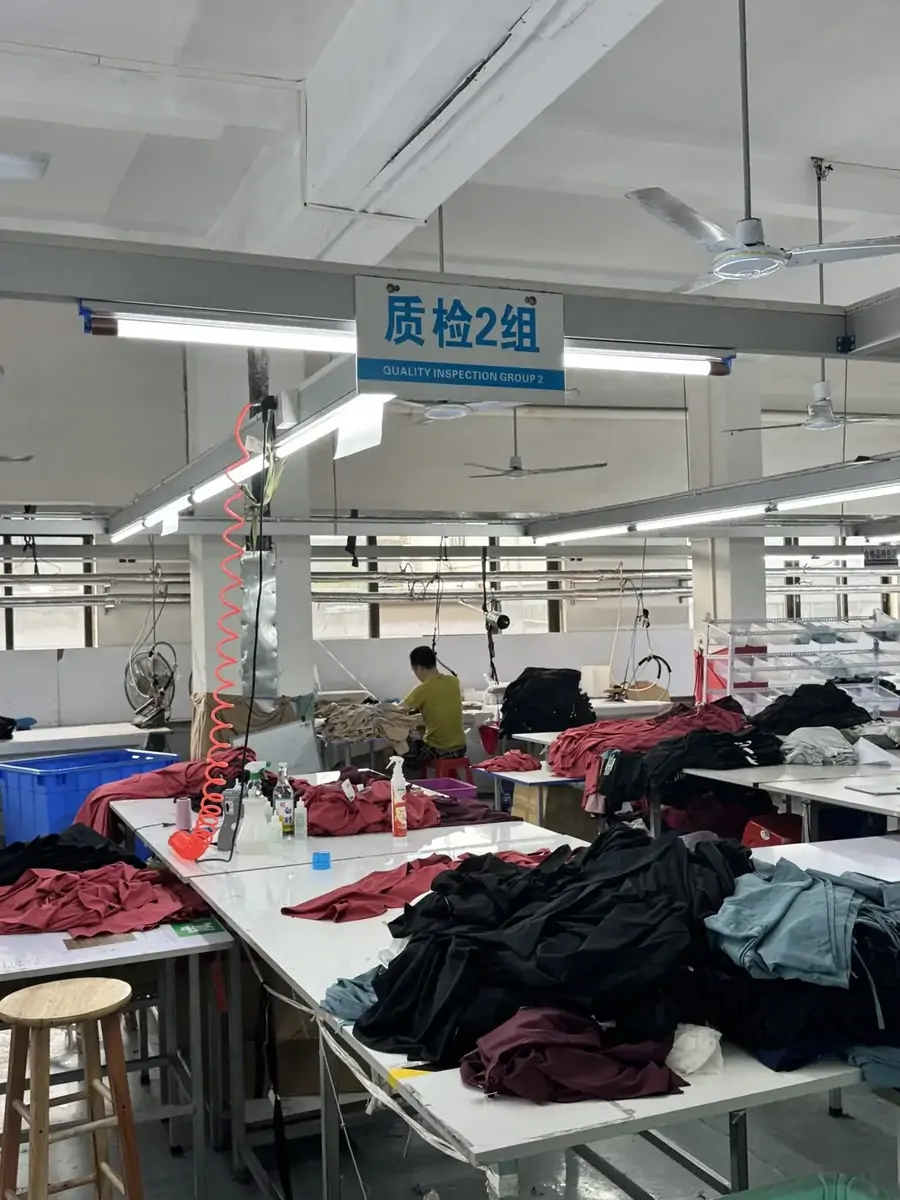
Inline quality inspection tables on the Dongguan floor

What happens

  • CNC cutting by dye lot; work moved on TEGOTE hanger lines and tracked in MES + ERP
  • Inline inspection at 20 / 50 / 80% of output, with photos to you
  • Final random inspection to an agreed AQL plan — ISO 2859-1 / ANSI/ASQ Z1.4, General Inspection Level II as the usual starting point
  • Third-party inspection welcome — SGS, QIMA, BV

What you receive

  • Inline reports with photos
  • Final inspection report
  • Packing list · FOB Shenzhen or DDP on request

Gate to move on

The lot passes the agreed AQL plan — if it fails, rework is at our cost. 70% balance after final inspection.

If it is not metRework at our cost and re-inspection against the same plan. The balance waits for a passing lot.

TimingBulk ~25–30 days after PPS · knit ~25–32 days · swim typically 30–40 days

ProofQC gates & AQL protocol · Coverstitch on our floor

The evidence trail

Every gate leaves a document you can keep.

By the time bulk ships, you hold a development file — not just an invoice. It is what lets a second order, a new colour or a new factory start from proof instead of from memory.

StageGateDocumentCleared byWhy it matters
01Performance briefDevelopment briefYou, with our deskFixes what every later check is measured against.
02Material engineeringFabric spec card · approved lab dipYouLocks hand, weight and colour before sampling.
03Performance validationValidation plan · test reportsThe lab you acceptShows what is proven and what is still a programme gate.
04Pattern & prototypeMeasured spec sheet · construction notesOur sample room, reviewed by youTurns a picture into a buildable, measurable garment.
05Fit & gradingFit comments · graded specYouMakes every size behave like the approved sample.
06Pre-production sample (PPS)Signed PPS · sealed sampleYou — by signatureThe physical standard bulk is inspected against.
07Bulk control & shipmentInline reports · final inspection report · packing listOur QC and your inspectorProof the lot matches the PPS before the balance is paid.

Where problems get caught

Most bulk failures are decided long before bulk.

The faults buyers send back are rarely sewing mistakes. They are fabric, fit or approval decisions made too late. This is where each one is stopped.

See how it plays out: sheer leggings rescue · pilling and colour transfer fix · multi-fabric colour matching · all programme reconstructions

Two ways to develop a product

Picture-first sourcing vs fabric-first development.

Both can ship a garment. Only one can tell you why it should keep performing wash after wash — and show the evidence before you pay the balance.

AspectPicture-first sourcingFabric-first development · ZIESHINE
Starting pointA style photo and a target priceHow the garment must perform — activity, climate, the function that must not fail
Fabric choiceWhatever is in stock at the priceRanked against wear requirements: a named base, or co-developed with a mill
TestingOften after the first complaintA validation plan before cutting, every line status-labelled
SampleMade on whatever fabric is availableProto on the target fabric; PPS on the bulk fabric and dye lot
QualityA final look before packingInline at 20/50/80% plus final inspection to an agreed AQL plan
What you keepA quoteBrief, spec card, validation plan, sealed PPS and inspection reports

Brand-friendly terms still apply: Standard 150 pcs / style / colour · library trial from 100 · below 100 +15% · Samples US$50–100 per garment piece · 7–9 working days · 30% after PPS · 70% after final inspection (AQL) · FOB Shenzhen / DDP. Full ladder: Company facts.

Buyer FAQ

What is a fabric-to-garment development process?

It is one managed route from the performance brief to shipped bulk: material engineering, performance validation, pattern and prototype, fit and grading, a pre-production sample and controlled bulk. Each stage ends in a written gate, so the fabric that was chosen and tested is the fabric that ends up in the garment you sell.

Do you make the fabric yourselves?

We specify and co-develop it; specialist mill partners knit, dye and finish it to that specification. We do not own knitting or dyeing machines. Lab dips are checked by our team against your standard, and fabric developed for you is contractually exclusive. Garments are then cut, sewn, inspected and packed on our own floor in Dongguan.

Which tests happen before bulk?

The ones your activity depends on. In-house, we run a four-way stretch gate and a squat check at about 400 lux before sampling. Programme tests — for example colourfastness, pilling, abrasion, chlorine, UPF or dimensional stability — are written on the PO and run at a lab you accept. AquaForm™ 220 already has an Intertek report on file (GZHT03093360). Suggested validation is a development path, not a claim that every listed test has already been completed on every fabric.

What is a PPS, and why does bulk wait for it?

A pre-production sample is made on bulk fabric, bulk trims and the bulk dye lot. When you sign it, it becomes the sealed standard the line is inspected against. Nothing goes into bulk before that signature, and the payment terms follow it: 30% after PPS · 70% after final inspection (AQL).

How do you keep bulk consistent with the approved sample?

Bulk is cut by dye lot, moved on TEGOTE hanger lines and tracked in MES + ERP. Inline inspection runs at 20, 50 and 80% of output against the sealed PPS, and final random inspection follows an agreed AQL plan (ISO 2859-1 / ANSI/ASQ Z1.4, General Inspection Level II as the usual starting point). If a lot fails, rework is at our cost. Third-party inspectors such as SGS, QIMA and BV are welcome.

What happens if a gate is not met?

The stage repeats; the standard does not move. A lab dip is re-dipped or the base is changed, a failed critical test sends the fabric back for a new finish or base, fit runs another round until every comment is closed, and a rejected PPS is corrected and resubmitted — the bulk date moves instead. If a bulk lot fails final inspection, rework is at our cost and the lot is re-inspected against the same plan before the balance is due.

Can I start with only a sketch or a photo?

Yes. We accept design images, sketches, drafts, moodboards, simple design files, tech packs or library links. The development desk turns them into a written brief with ranked performance priorities and a measurable sample in 7–9 working days.

What are MOQ, sample cost and lead time?

Standard 150 pcs / style / colour · library trial from 100 · below 100 +15%. Samples US$50–100 per garment piece · 7–9 working days. Custom fabric is typically 500m–1300m+ per colour and adds about 15–20 days. Bulk runs ~25–30 days after PPS for activewear, ~25–32 days after PPS for knit and typically 30–40 days after PPS for swim.

Wear performance by activity · Fabric Selector · Fabric test pack · Capabilities · Manufacturer desks
Start with performance

Tell us how the garment must perform. We will answer all three questions in writing.

Send a sketch, a photo or a tech pack. The export desk replies within 12 hours (GMT+8).